
What Does The Future of Social Media Look Like?
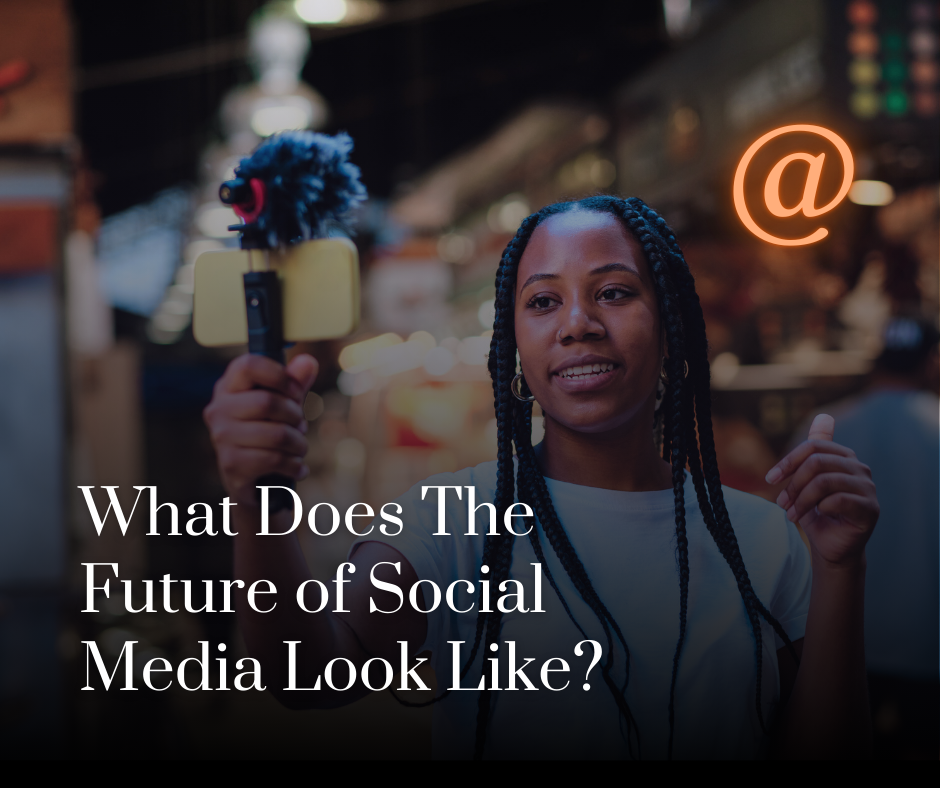
I’ve been thinking a lot lately about how we socialize.
Not in a nostalgic “things were better back then” way — but more in a pattern recognition way. I lived through the different phases, and now that we’re deep into the current one, something feels different enough that it keeps pulling my attention.
Before social media, socializing required presence.
If you wanted to see people, you had to actually go somewhere. There were hangout spots. Bars, lounges, someone’s house, a familiar corner where everyone knew to meet. You called people. You showed up. You waited. If someone was late, you just… waited.
Cell phones either didn’t exist yet or were just becoming a thing. They weren’t smart. They weren’t social. They weren’t places you lived. They were tools — not environments.
Your social circle was mostly whoever lived close enough to see regularly. And when friends moved away, relationships naturally changed. Not because you didn’t care, but because access mattered. Staying in touch meant phone calls, emails, or the occasional visit. There was effort involved, and effort carried weight.
You didn’t know what everyone was doing all the time. You caught up in person, through stories. Because of that, seeing people felt fuller. You hadn’t already consumed their life through a screen.
Then social media arrived — and at first, it felt like an extension, not a replacement.
It solved a real problem. Friends who moved away didn’t just disappear anymore. You could see what they were up to. Pictures from events. Updates from their lives. Milestones you would’ve otherwise missed.
Distance shrank, but intention stayed intact.
Your social circle was no longer limited to a ten-mile radius. Friends in California could see what you were doing in Miami. Friends in New York could see what you were having for dinner. Not in real time — but close enough to still feel connected.
Early on, it didn’t feel demanding. You logged in, checked in, and logged off. The content wasn’t optimized. It wasn’t strategic. People posted because they wanted to share — not because they needed engagement.
But somewhere during that phase, something else entered the room.
Notifications.
At first, they felt harmless. Helpful, even. A way to know someone commented. A way to know someone liked what you shared. The interaction still felt pure — but now it came with a signal.
A small hit of validation.
We started to associate activity with importance. Seeing likes climb felt good. Seeing comments come in felt better. Seeing that red notification badge on the app icon felt… significant.
Someone noticed you. Someone reacted. Someone cared.
Without realizing it, attention became measurable. And once attention became measurable, it became addictive.
That’s when the shift started.
Feeds stopped being chronological. You no longer saw posts because they were new — you saw them because they were selected. Your feed stopped reflecting your friends and started reflecting what the algorithm believed would keep you there.
There are times I’ll log in and see a post from a close friend that’s two or three days old. I know I was on the app during that time — but I never saw it. Meanwhile, if I like one post about the Miami Heat, my entire feed suddenly fills with Miami Heat content.
Not because my friends are talking about it — but because the system noticed my attention.
Social media slowly shifted from connection to optimization. The goal wasn’t to help you keep up with people anymore. The goal was to keep you engaged. Attention became the product.
And somewhere along the way, social media stopped reflecting our relationships and started shaping our behavior.
Then it became a business.
People launched companies. People built careers. Entire industries formed around attention. “Influencer” entered the conversation. Profiles became portfolios. Posts became content. Consistency started to matter more than intention.
Output became the expectation.
Posting once a day didn’t feel like enough. Because you never knew what would hit. So you posted more. You tested angles. You chased traction. It became a numbers game.
And before AI ever entered the picture, we started polishing ourselves.
Photos stopped being snapshots. They became drafts. You didn’t upload a picture straight from your phone anymore. It went through apps first. Lighting adjusted. Angles refined. Skin smoothed. Imperfections softened.
What once felt like “a picture of you” became a curated version of you.
Not fake — just refined.
Over time, posting without editing felt unfinished. Almost careless. As if the raw version wasn’t enough. And this didn’t just apply to images. It applied to captions. Emails. Posts. Everything had to sound better than it naturally came out.
We learned to polish before sharing. And the platforms rewarded that polish.
So when AI showed up, it didn’t feel like a leap. It felt like a continuation.
Scripts could be written for you. Captions generated. Ideas outlined. Then avatars. Digital twins. Perfect delivery. No filler words. No awkward pauses. Consistent output on repeat.
The message might be fine. The information might be accurate.
But something felt missing.
The pauses were gone. The hesitations were gone. The subtle cues that remind you there’s a real person on the other side were gone. It wasn’t wrong. It just wasn’t felt.
And I think people are starting to notice that.
I don’t think we’re going back to the way things were before social media. That chapter is closed. But I do think we’re heading toward a correction.
A craving for presence. For real-time interaction. For hearing someone think out loud instead of consuming something perfectly packaged.
That’s why podcasts feel different. You hear people stumble. You hear them change their mind mid-sentence. You hear the imperfections — and those imperfections make it feel real.
Same with live streaming. No heavy editing. No safety net. Just people responding as themselves.
I don’t know exactly what comes next. But I know what it’s reacting to.
The exhaustion of polish. The fatigue of perfection. The sense that everything we see has been cleaned up too much.
Eventually, I think imperfections will matter again. Because imperfections are proof of presence.
Everything we put out now is a refined version of ourselves. Our photos. Our words. Our posture. Our delivery. Even our faces and voices.
Maybe it’s efficient. Maybe it’s inevitable.
But I don’t think it’s satisfying.
At some point, I think we’ll want to feel people again. Not their output. Not their brand. Not their polished presence.
Just them.